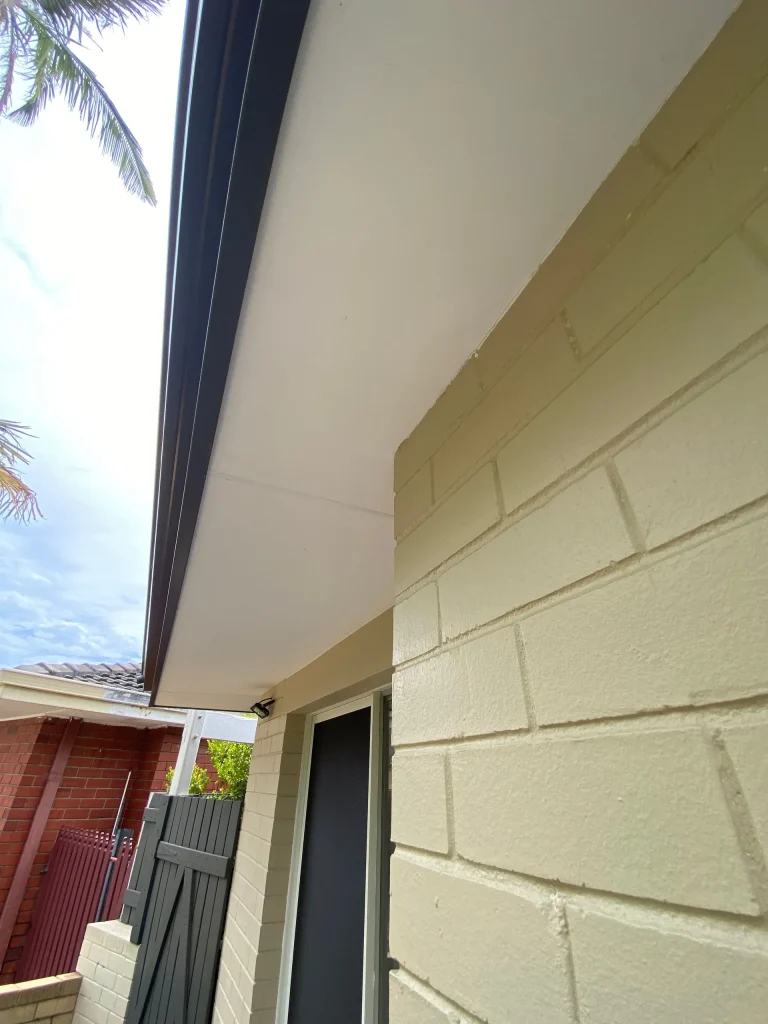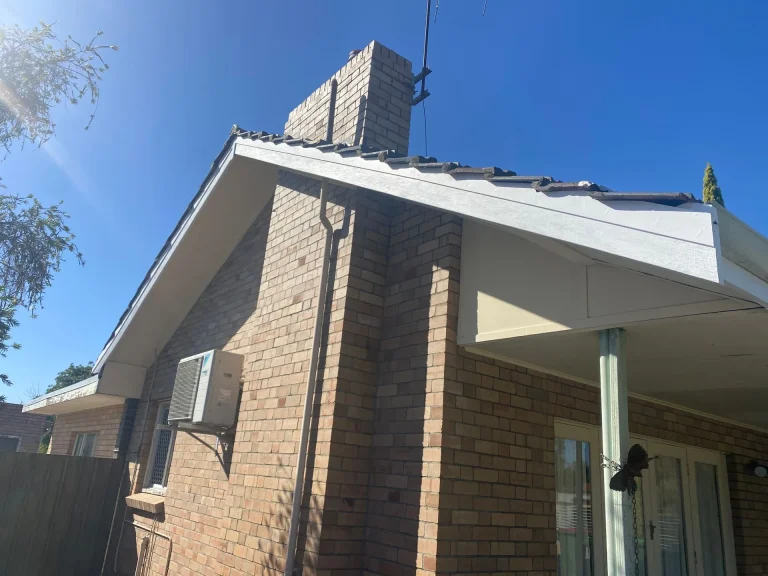
How to Stop Gutters Overflowing in Heavy Perth Winter Rain
Fix overflowing gutters in Perth…
January 2, 2026

Most homeowners think of their roof as tiles or sheets and standard gutters. But the components that actually prevent leaks in Perth’s heavy winter rains are the ones you rarely see: roof valleys, box gutters and flashings. These elements handle the most concentrated water flows on your roof, and when they fail, the damage is usually internal — stained ceilings, wet insulation and even structural timber decay.
Understanding what these components do and how to spot problems early can save Perth homeowners thousands in avoidable repairs.
| Component | Location | Function | Common Material |
|---|---|---|---|
| Roof valley | Where two roof planes meet in a V-shape (internal angle) | Channels concentrated water from two roof faces into the gutter | Colorbond steel or lead |
| Box gutter | Between two roof sections (often on additions or between a house and garage) | Collects and drains water trapped between parallel roof lines | Colorbond steel, custom-folded |
| Flashing | Where roof meets walls, chimneys, vents or other penetrations | Seals the joint to prevent water entering under roofing material | Colorbond steel, lead or aluminium |
| Barge flashing | Along the gable ends (sides) of a pitched roof | Seals the edge of the roof where tiles or sheets end | Colorbond steel |
A roof valley collects rainwater from two converging roof planes and funnels it downward. During Perth’s heavy winter storms — where rainfall intensity can exceed 50 mm per hour — valleys carry an enormous volume of water. If a valley is dented, corroded, or has debris trapped beneath the tiles at the valley edge, water overflows sideways into the roof cavity.
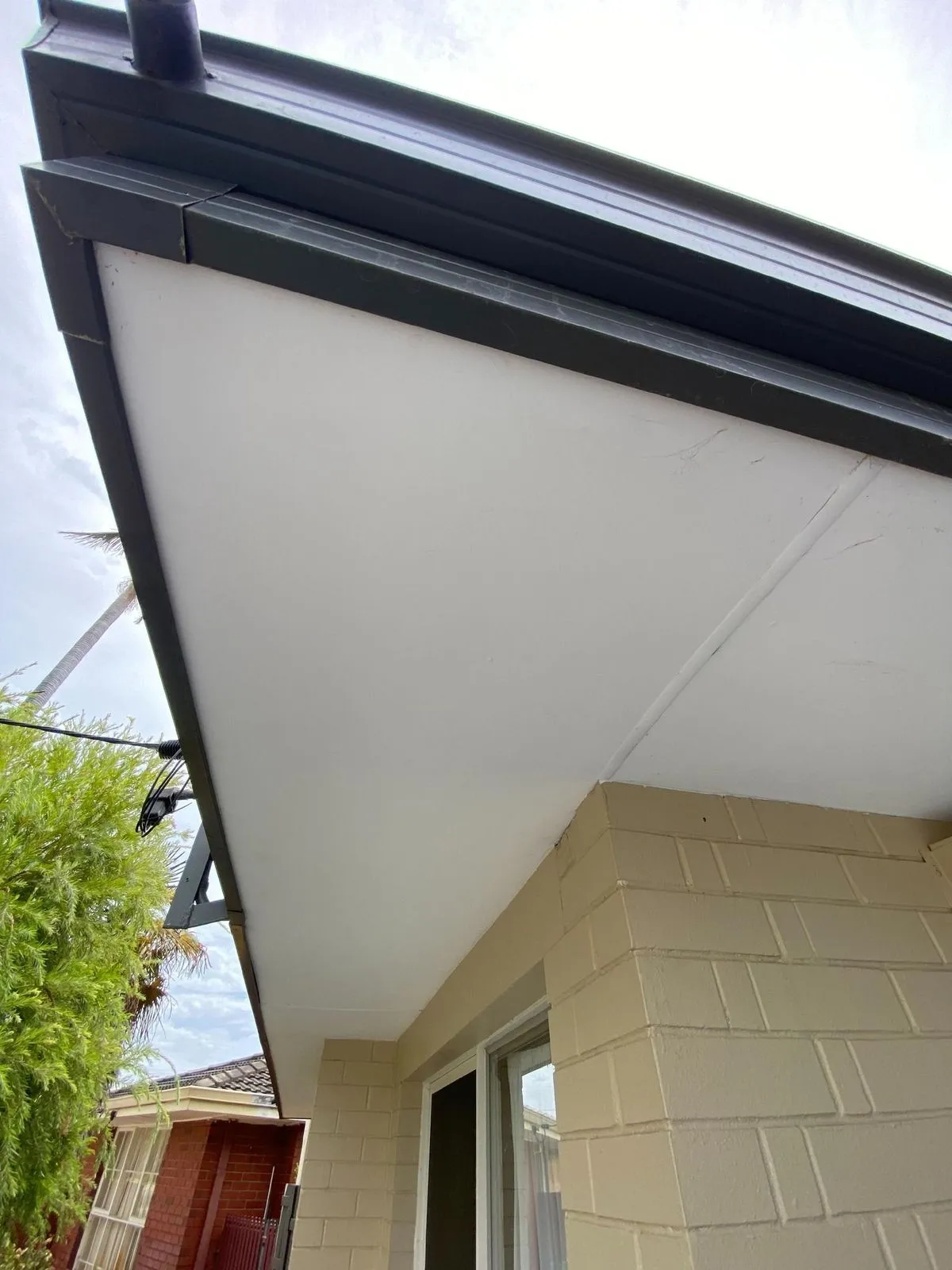
Valleys are especially prone to issues on older Perth homes in suburbs like Maylands, Mt Lawley and Subiaco, where original galvanised steel valleys have corroded after 30–40 years of service. Modern Colorbond valley irons last significantly longer, but even these need inspection every few years to check for debris build-up and corrosion at laps.
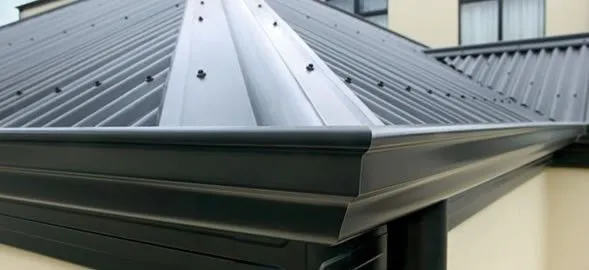
Box gutters are concealed gutters that sit between two roof sections. They are common on Perth homes that have had extensions — for example, where a new bedroom wing meets the original house, or between a house and an attached garage. Unlike standard eaves gutters, box gutters are hidden, so blockages and failures often go unnoticed until water is coming through the ceiling.
Box gutters must be sized to handle the combined water flow from both roof faces and need a greater fall than standard gutters because there is no overflow edge — if they fill up, water goes straight into the building. The NCC (Volume 2) requires box gutters to handle a 1-in-100-year storm event, compared to 1-in-20 for standard eaves gutters.
Flashings are metal strips or sheets that seal the joints between the roof and other surfaces: walls, chimneys, vent pipes and skylights. In Perth, the most common flashing failure is the wall/roof junction on extensions or second-storey additions. When the sealant between the flashing and the wall cracks (often due to Perth’s extreme summer heat cycling), water enters the wall cavity during rain.
Coastal suburbs like Scarborough, Fremantle and Cottesloe see accelerated flashing deterioration due to salt-air corrosion. Lead flashings hold up best in coastal conditions, while Colorbond flashings perform well in most other Perth locations.
We recommend inspecting valleys, box gutters and flashings annually — ideally in late autumn (April) before the wet season. A professional roof maintenance inspection covers all three components. If repairs are needed, it is far cheaper to re-seal a flashing or replace a valley section now than to repair water-damaged ceilings, framing and insulation later.
Perth Property Improver inspects, maintains and repairs all roofline components as part of our complete gutters, eaves and roofline service. If a valley needs replacing or a box gutter needs upgrading, we handle the full scope — from gutter replacement to flashing renewal.

Tell us what you’re working on. Free site visit, indicative budget, no obligation.
Get a Fast Quote